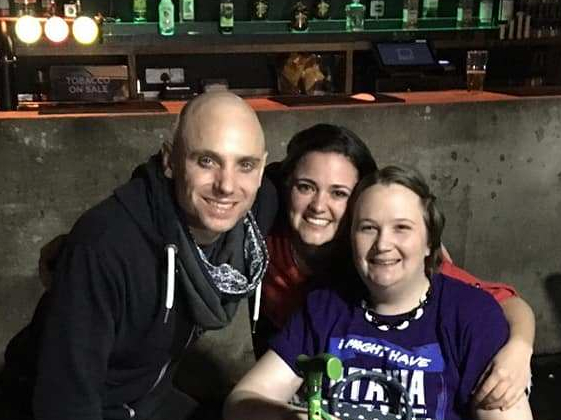
International Ataxia Awareness Day.

Psychologically dealing with a diagnosis and the progression of ataxia is hard. Coming to terms with the fact that your legs, arms and other factors like speech and swallowing don’t do what you want is difficult.

At the beginning of the year I did some filming for a patient video and watching it I was horrified to hear how much I slurred my speech when talking.

Whilst I used a stick when my arthritis was bad, mentally accepting that I needed a mobility scooter to get around was difficult and took time to accept but now I don’t know how I ever managed without it.

All my conditions cause fatigue and the tireder I get the worse my balance and co ordination is to the point that I can be constantly dragging my feet and falling over when I’m tired.

My ataxia has also led to hand jerks spilling squash all over the place, swallowing air resulting in coughing and vomiting and falling over whilst kneeling.

Ataxia is rare and the type they think I have is even rarer so it cannot be predicted how my condition will progress which is terrifying but luckily I have amazing friends and family who help me. Even though my niece and nephew don’t understand it they love sitting on my lap on the scooter and going 4mph down the road.

Yes ataxia sucks but those of us affected are extremely lucky to live in a time when there are so many aids to help us in our day to day life. A friend recently sent me the following and it is so true

I saw this and thought it was so incredibly positive. Thought I would share

“I met a person who was in a wheelchair. He told a story about how a person once asked if it was difficult to be confined to a wheelchair. He responded, “I’m not confined to my wheelchair — I am liberated by it. My wheelchair is the reason why I am able to move about freely and go anywhere I want to. Otherwise, I would be bed-bound and It would have been really hard for me to even leave the room or this house.”

It’s Jeans for Genes day

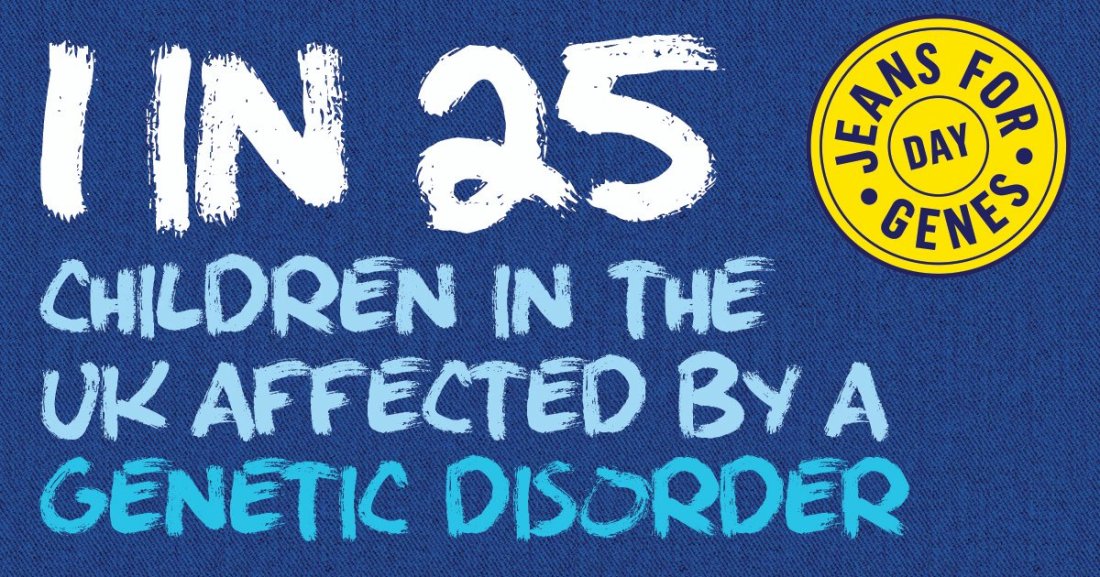
Today is Jeans for Genes day. Will you be doing your part to help children with genetic disorders?

It is estimated that one in 25 children is affected by a genetic disorder. 30,000 babies and children are newly diagnosed in the UK each year.

Some genetic disorders are apparent at birth while others are diagnosed at different stages throughout childhood, and sometimes into adolescence.

Money raised each year helps organisations carry out activities for children with genetic disorders. You can read about how Genetic Disorders UK/Jeans for Genes grant programme here.

The most common genetic disorder everyone has heard of is Down Syndrome, but less common is Fibrodysplasia Ossificans Progressiva (FOP). FOP is one of the rarest and most disabling genetic conditions known to medicine, causing bone to form in muscles and other connective tissues such as tendons and ligaments.  Bridges of extra bone develop, in many cases, across the joints, progressively restricting movement and forming a second skeleton that imprisons the body in bone. You can learn more about FOP here.

Another rare condition is Xeroderma Pigmentosum (XP). One of the co-founders of Teddington Trust is the mother to a boy affected by this condition. Teddington Trust provides UV blocking film, hats and protective gloves for those affected as well as support and guidance.

XP is characterised by an extreme sensitivity to ultraviolet radiation (UVR) which affects less than 100 patients in the United Kingdom and equally low numbers around the world.Ultraviolet Radiation (UVR) is present during all daylight hours, found in many types of artificial lighting and even lightning. Unless patients with XP are protected from UVR, their skin and eyes will be severely damaged and this can lead to skin cancer. XP patients are at a 10,000 fold increased risk of developing skin cancer than the general population and often this starts at a very young age.

About 30% of people with XP also develop neurological abnormalities which can range from learning difficulties, hearing loss and eye sight problems to loss of gross motor skills and mobility. 

There is no cure for XP, but much can be done to prevent and treat some of the problems it causes.

Protection from all sources of UVR is required, including total daylight avoidance via specialised clothing and sunscreens. A significant commitment to lifestyle changes is also required to mitigate against the risk of exposure and combat its effects. People with XP must also undergo frequent skin, eye and neurological examinations and have prompt removal of cancerous tissue.

Thousands of these genetic disorders affect as few children in the UK as FOP & XP and it is for this reason that it is so important to support this day.

If you haven’t been able to do your part today you can host a Jeans for Genes day anytime to help children with a genetic disorder.


Jeans for Genes is coming

Jeans for Genes occurs each year and raises money for children and awareness of genetic disorders.

Individually genetic disorders are rare but combined they are common.

As several of my conditions are caused by genetic mutations and having seen how genetic disorders affect children growing up this is a cause I support.

Some genetic disorders are so rare there is only a couple of children affected by certain disorders in the UK so it is hard for the organisation’s to get any support.

Jeans for Genes helps organisations host family days, symposiums, learning opportunities for families and carers giving families a chance to meet others that are also affected.

So on the 21st September don your jeans and help children with genetic disorders.

Ataxia awareness day is coming

On 25th September it is ataxia awareness day. A few years ago I wouldn’t have known it or really cared but now I do.

Raising awareness of rare conditions is really important so people can understand a bit about what you’re dealing with. There are so many rare conditions you can’t expect everyone to know about every single one but if someone in your life is affected by one it helps them and you to understand it.

So in the run up to ataxia awareness day I urge you all to spend 5 minutes looking it up and learning a small bit about it.

A lack of awareness is so important; several times I was interrogated by bouncers or not allowed into venues because bouncers thought I was drunk.

Unfortunately this is not uncommon as the symptoms do resemble intoxication which has led to many shirts and resources with the slogan “I’m not drunk I have ataxia”

Ataxia is often referred to as the love child of MS and Parkinson’s in an attempt to get people to understand it and how it affects someone. The main relation is it’s a progressive neurological condition. The symptoms can change from person to person including the rate of progression but the one thing they all have in common is a reduction of balance and coordination.

So today visit one of these organisations and do a bit of learning.

Ataxia UK

National Ataxia Foundation

Or even a visit to a Wikipedia page will increase your knowledge.

Happy Birthday NHS

(Apologies in the delay since my last post, fatigue has made me sleep a lot)

Today I’ve seen many posts about how much the NHS has helped people and how some people wouldn’t be here without it and I’m definitely one of them.

During my 30 years the NHS has been my rock, growing up I called it my second home. For the first few months of my life our local doctor didn’t believe there was anything wrong with me (an issue with rare patients) but my parents knew they were wrong and pushed for a diagnosis. From diagnosis day I had an amazing Immunology team looking after me and trying to keep me well with infusions of what we call “liquid gold

Development of Crohns Disease aged 7/8 led me to having a second NHS team. This time in Gastroenterology. Countless procedures to monitor my Crohns and an array of different medications didn’t work and I had my first surgery when I was 12 as an emergency and was in hospital recovering for a long time. During my hours lying in my bed in a side room I made good friends with all the doctors and nurses with many of the nurses coming and keeping me company when they weren’t needed during the night and I was awake. One in particular was named Cordelia and loved jokes so a present to me of a joke book from one of my friends went down really well with her.

My second operation when I was 14 was the same although I wasn’t in for as long due to me being healthy when admitted for my planned op.

These teams supported me through many years, moving schools and eventually to uni. My Immunology team taught me how to infuse subcutaneously so I could do it myself in university halls and student homes and I carried on.

Age 21 I had a weird side effect to ‘Humira’ and Gastroenterology referred me to Dermatology who quickly diagnosed Psoriasis which had become infected. A mixture of creams and potent tables soon settled down and was manageable.

A few years later I woke up on a Wednesday morning and my knee had swollen and I could barely stand on it . A trip to minor injuries led to a trip to A&E when they stuck a needle in my knee and sucked out excess fluid. There was so much they had to undo the syringe which was full and attach a new one whilst leaving the needle poking out of my knee. After some testing of the fluids, blood tests, x-rays Rheumatology diagnosed me with arthritis. After a year or so I was on some amazing meds and now just get a flare up of it from time to time and a bit of aching but am generally fine.

Then finally about 4 years back I was admitted to hospital because of my Crohns and developed postural hypotension so was in for quite a while. An Endocrinologist was sen to look at me and noticed I had bad nystagmus which explains why I had said my vision was “shimmery” for a few years. A head MRI discovered cerebellar atrophy and white matter on the brain. I was referred to a Neurologist and now see a Neurologist with great knowledge on ataxia.

Meanwhile my Immunology team are doing genetic testing on me to confirm which type of ataxia I have although they’re 99% sure it’s Ataxia Pancytopaenia. They’re working with a Clinical Geneticist to look at my highly interesting DNA.

The NHS also provided me with hydrotherapy to help my joints (hated it) a physiotherapist when I was diagnosed with arthritis, a physiotherapist who came to my house when I developed ataxia properly and now every six weeks I speak to an NHS Clinical Psychologist who helps me overcome the emotional impact of being unable to walk properly.

I am also now under Endocrinology for a new issue.

Through out all this, from the age of 18 I have had amazing GPs and I absolutely adore the one I have now. She liaises with all my specialists, listens to me and accepts that I know what I’m talking about helping me where needed.

So for me the NHS has quite literally been a life saver and continues to be so.

Happy Birthday NHS!NHS_70_logo


World PI Week day 3

My plan was to post every day of World Primary Immunodeficiency Week but fatigue has already made me miss a day.

Today I took over the twitter and facebook feeds of Rare Revolution Magazine to let more people know about Primary Immunodeficiencies.

#PrimaryImmunodeficiency said to affect over six million people worldwide.

Early Diagnosis

PIDs are a group of over 300 different conditions that affect how the body’s immune system works.

Early Treatment

A large proportion of people affected by a PID have immunoglobulin replacement therapy to help keep them free from infection and are given antibiotics as and when an infection occurs. Some other types of PID may involve taking antibiotic and/or antifungal medicine daily to stave off infection. More specialised treatments and potential cures include bone marrow transplantation, enzyme replacement therapy and gene therapy.

Public awareness of symptoms

The effects of a PID can be immense. For example, a baby born with severe combined immunodeficiency (SCID) might not survive more than a couple of years without isolation in a sterile environment until a bone marrow transplant can be carried out. Even for a child with a less severe disorder, prolonged periods of ill-health can disrupt schooling and social contacts.

For an adult, frequent debilitating illnesses can make it more difficult to pursue a career or enjoy family life. There can be psychological problems, too. Feeling isolated, the fear of losing one’s income, or the anguish of caring for a sick child, can take its toll.


Severe forms of PI

Primary Immunodeficiency UK – PIDUK supports the implementation of a UK national screening programme for Severe Combined Immune Deficiency (SCID) in the knowledge that it will help save the lives of children with SCID.

Extreme susceptibility to infections means that SCID remains fatal within the first year of life without correction of the underlying immune deficiency. Bone marrow transplantation and gene therapy offer curative treatment options for this condition and evidence shows these have a 95% succes rate. This is why PID UK is campaigning for newborn screening to be implemented in the UK for SCID.

You can learn more about primary immunodeficiencies at www.piduk.org

World PI Week

22nd-29th April is World Primary Immunodeficiency Week raising awareness amongst the general public of primary immunodeficiencies.

Primary immunodeficiencies are disorders in which part of the body’s immune system is missing or does not function properly. When a defect in the immune system is inherited (carried through the genes), it is called primary, or inherited, immune deficiency. There are over 200 forms of Primary Immunodeficiency (PI), ranging widely in severity. PI often presents itself in the form of “ordinary” infections.

Physicians sometimes treat the infections while missing the underlying cause, allowing the illnesses to recur, and leaving the patient vulnerable to vital organ damage, physical disability, and even death.

I was lucky in that mum knew something was wrong with me and pushed for me to see a specialist which led to my diagnosis.

The Objectives of World PI Week are:

  • To drive recognition of primary immunodeficiencies (PI) as an increasingly important group of diseases
  •  To increase recognition of PI amongst the medical profession as well as parents, school teachers, day care centre employees, researchers and nurses to increase the understanding of these diseases and promote early diagnosis
  • To encourage health authorities to use existing awareness materials produced by JMF, IPOPI, PID UK and other stakeholders to promote the timely diagnosis and treatment of  people living with PI
  • To promote the model of combining physician education and global awareness with the infrastructure to diagnose and treat PI worldwide
  • To stimulate efforts to improve the recognition, diagnosis, treatment and quality of life of people with PI world-wide


Fatigue

So many people think they understand when you say you are tired but they don’t.

When I say I’m tired it’s quite often bone weary, can’t get off the sofa to even go to the loo, body temperature up the spout, struggle to put one foot in front of the other tiredness.

The closest a “normal” person that I know has ever got to fatigue was my sister when she was pregnant.

Even if I feel okay, exhaustion can hit me suddenly out of the blue or because I forget or don’t realise how much an activity will take from me.

For example: 2 weeks ago it was sunny and I felt good so I mowed the lawn. For 4 days after I struggled to move, cancelling lunch with a friend and a birthday dinner.

So remember a simple task for you can be a momentous task for those with a rare condition..

Celebrate every Birthday

Last week I turned 30!! I never thought that would happen so I decided to celebrate in style.

Then it snowed!

I freaked out but still 70 people made it from Cornwall and Devon, Yorkshire and Kent to my afternoon tea party with a bouncy castle, soft play and face painter.

March 17th (56).jpg

It was amazing to see everyone and I did get quite emotional because of it.

So to all my family and friends who made the effort to come and celebrate with me,

Thank You.

I may have slept most of the hours since then, and on Monday I kept weeping from tiredness but the joy of being able to celebrate such a big birthday was worth it.

Instead of presents I asked for donations to Primary Immunodeficiency UK as they are so helpful to me, my boss there is so understanding which is needed for dealing with fatigue.

Almost all rare disease patients have their own battle to fight and mine is tiredness. We all want to still be working and PID UK have made that possible for me.

The biggest battle of all is to make it to your next birthday and I did and I did in STYLE!!


5H1A75035H1A73975H1A7410

Neurogenetics

Today I had an appointment with Dr Tofaris at the Neurogenetics clinic at the John Radcliffe hospital.

Honestly I was apprehensive. There is no cure for ataxia so the main thing is altering your lifestyle and if needed treating the symptoms which works to a point.

My other concern was that the type of ataxia they believe I have is so rare they cannot predict how it will develop.

My immunology team are currently looking at my DNA, genes and mutations to see whether they can give me some more answers and have so far identified two variants in the gene called SAM9L Patients with mutations in this gene  have been reported to have ataxia pancytopaenia syndrome.

It ended up being a brilliant and really useful appointment, I will see Dr. Tofaris once a year unless I request to see him more often. The thing with ataxia is there is no cure so only managing of the condition and treating some of the symptoms.

I did lots of tests and even discussed things that may or may not be attributed to the ataxia such as my toes.

What has been confirmed is that the ataxia was the reason i could never hop, ride a bike or play games involving catching or hitting a ball.

I also saw Prof Nemeth who is a clinical geneticist with a special interest in ataxia. She has suggested getting all my consultants together to discuss me as I am such a rare case.

We talked about how my symptoms are developing, what I have in place to help me and future plans.

So whilst it might not seem to you much was achieved for me it was a really good appointment and reassures me the doctors are on track to keep getting me the best care possible.