Be Prepared

A few years I completed some important documents.

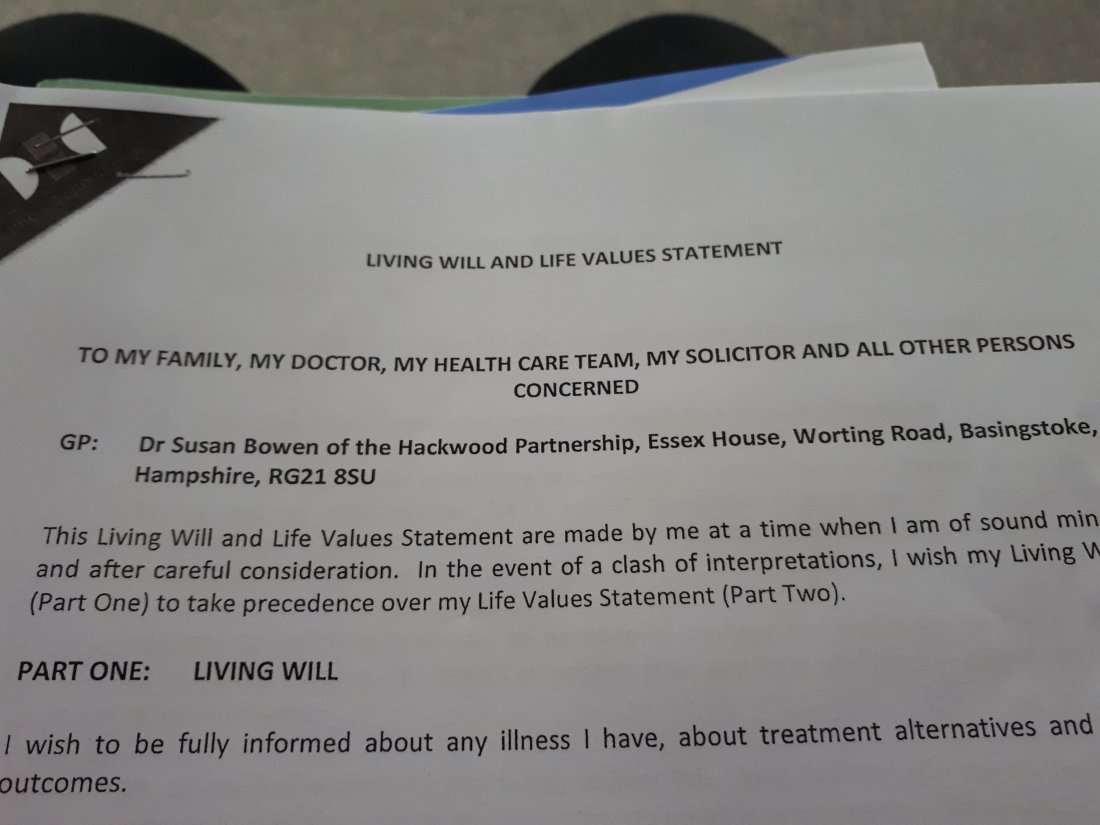
These were my will, my living will power of attorney documents for both health and finance.

It was important to me to do these documents so I get a say in whether my life is extended in certain situations.

My incredible sister is the executor of these documents and a living will means my end of life decisions are already made so she doesn’t have to make hard decisions.

The living will is the most important of these documents and lays out my wishes in certain situations. My independence means the world to me so for me it is important so being unable to care for myself in any situation is not one I want to be in and so I have laid this out in the document. I have also stated that I do not want any medical intervention if they will only extend my life and not lead to full recovery.

A copy of this is with each of my hospitals and my GP who when I gave it to her said she wished more people did them to reduce the hard decisions when they’re older.

I’ve appointed my sister and oldest friend to ensure my views are respected as I trust them not to fight against my decisions and do as I wish.

These 2 amazing people are listed as attorneys for my financial and heath matters in my power of attorneys and also as executors or my will which lays out who I wish to gift my estate etc to.

As my three favourite people Olivia, Zac and Becca are the main recipients with small gifts to other people.

It’s not nice to think about these things but in my eyes it’s necessary and something I would ask you all to consider, even if it’s just doing a will. A living will means your family doesn’t have to make difficult decisions.

So now I can focus on being a good daughter, great sister and awesome aunt knowing the important things are taken care of.

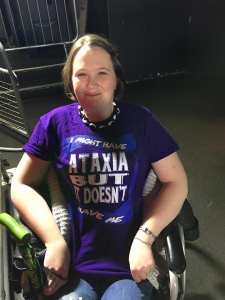
I may have Ataxia but it doesn’t have me

Ataxia

When I was diagnosed with Ataxia 4/5 years ago I didn’t quite know how to handle it and losing my independence was my greatest fear but with my incredible friends and family I’m still able to do most things.

I still have days when it all seems impossible such as when I lose my balance, fall over and bruise my butt (it’s happened a few times)

I had one thing that I still wanted to do and as we can’t predict the progression of my Ataxia I thought it might be best to do it sooner rather than later while I can still do stairs. That thing was to go to a gig performed by my favourite band who I’ve already seen 7ish times (now 8). However the venues they perform in aren’t always the most accessible so when I bought tickets several month ago I realised it needed serious planning.

First thing: email the venue to let them know and ask about wheelchair accessibility. Patterns in Brighton were incredibly helpful listing the number of steps and where they were and letting me sit at the front in my chair which they carried down for me. (Being in a wheelchair gets you a prime position as well :-))

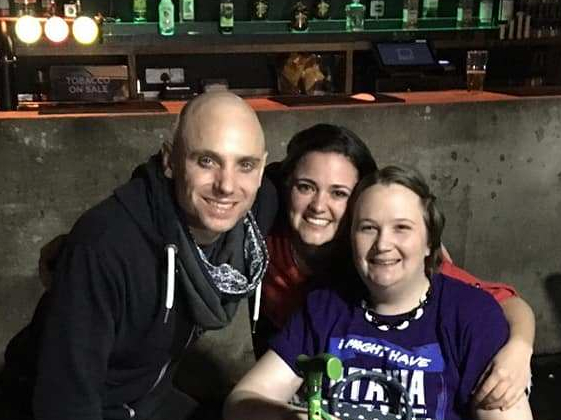
Second thing: Invite a friend who loves the band and doesn’t mind being my carer. Enter the awesome Siobhan Eyley with whom I have an absolute blast whatever we do.

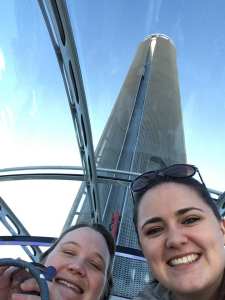
Brighton We napped, shopped, went up the i360 , ate lots (but no donuts :-(), got drunk and watched the best band ever.

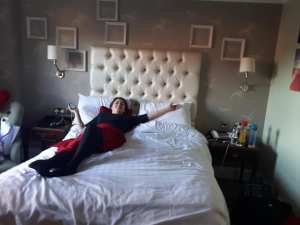
Third thing: book a hotel room. Turns out cheap hotels don’t have lifts or accessible bathrooms so we found a room with a very small bed for us to sharebed

The bed came in useful especially after getting home at 2.30am Sunday morning so needing a nap Sunday afternoon.

Then it was booking fun stuff.

Thank you to everyone for making the weekend such a blast, especially Siobhan and I am so glad I woke up with no hangover on Sunday.

Oh and we got a sword.

Excalibur


Can I Pray For You?

So I’m at the conference in Lisbon and one of the aims is to network so I started chatting to this guy. Just my luck it turns out he had nothing to do with Immunology but was a computer programmer there to make sure all the computers worked properly.

Anyway we were chatting away and I was telling him about my immunodeficieny and he interrupts and says “can I pray for you?” I wish I’d said no but in the shock of it I said “yes”, he followed it up with “can I touch your shoulder whilst I pray?” Major shock still playing a role I said yes again so he put his hand on my shoulder, shut his eyes and started praying out loud for me. Mum was gone getting coffee at this point and couldn’t return soon enough.

I have no problem if people want to pray and turn to religion for help with illness etc and at least he asked me but I so wish I’d said “NO”

After the prayer I told him I wasn’t religious and believed more in science and genetics. He told me I should give God another chance to which I replied “if God can fix my genes and DNA then brilliant”

If prayer gets you through things then brilliant but the next time someone asks me if they can pray for me I will be saying NO.

Lisbon done My Way

Last Tuesday I flew to Lisbon with my mum as my carer for a work conference for 3 days and 4 days to relax after.

Lisbon airport is part of an amazing service called MyWay. https://www.flytap.com/en-gb/special-needs/my-way

This amazing service meant that when we arrived on the tarmac and all other passengers disembarked down steps and onto buses an enclosed cabin lift took me from the aircraft door and down to a waiting mini bus. I was then pushed all the way through the airport where were got our luggage and a MyWay person continued to get us all the way to a taxi. This service meant from the moment we landed to getting in a taxi we were escorted. This took a massive weight off our minds and with the same thing going home it meant the journeys were easy.

Travelling around Lisbon though was not. There are many blogs about wheelchair travel and how difficult it is but we still gave it a go.

The hotel that we stayed at was found by the conference organisers with a reduced mobility bathroom which had a shower seat and rails which was brilliant. The Pestana CR7 was brilliant with great food and the staff were so helpful getting me into taxis each day.

The conference was brilliant, meeting people I’ve been emailing for years and hearing some really interesting talks.

Our 4 days relaxing involved an unsuccessful visit to the castle (uneven cobbles on a hill) a trip to a panoramic view 18 floors up (amazingly windy), Lisbon zoo, (lots of animals but they needed more enrichment), Jeronimos monestry (from the outside) and Belem and some shopping.

If you’re going to Lisbon in a wheelchair I would advise booking some wheelchair friendly tours so that each day you see what you want to see with the assistance you need.

Also the wind can be incredible so wrap up warm with a scarf especially.

Staying near Praco de Comercio means it’ll be flat where your hotel is (important so you don’t roll away when leaving the hotel)

So in summary I would say travelling round Lisbon in a wheelchair is difficult but if you plan ahead then possible.

International Ataxia Awareness Day.

Psychologically dealing with a diagnosis and the progression of ataxia is hard. Coming to terms with the fact that your legs, arms and other factors like speech and swallowing don’t do what you want is difficult.

At the beginning of the year I did some filming for a patient video and watching it I was horrified to hear how much I slurred my speech when talking.

Whilst I used a stick when my arthritis was bad, mentally accepting that I needed a mobility scooter to get around was difficult and took time to accept but now I don’t know how I ever managed without it.

All my conditions cause fatigue and the tireder I get the worse my balance and co ordination is to the point that I can be constantly dragging my feet and falling over when I’m tired.

My ataxia has also led to hand jerks spilling squash all over the place, swallowing air resulting in coughing and vomiting and falling over whilst kneeling.

Ataxia is rare and the type they think I have is even rarer so it cannot be predicted how my condition will progress which is terrifying but luckily I have amazing friends and family who help me. Even though my niece and nephew don’t understand it they love sitting on my lap on the scooter and going 4mph down the road.

Yes ataxia sucks but those of us affected are extremely lucky to live in a time when there are so many aids to help us in our day to day life. A friend recently sent me the following and it is so true

I saw this and thought it was so incredibly positive. Thought I would share

“I met a person who was in a wheelchair. He told a story about how a person once asked if it was difficult to be confined to a wheelchair. He responded, “I’m not confined to my wheelchair — I am liberated by it. My wheelchair is the reason why I am able to move about freely and go anywhere I want to. Otherwise, I would be bed-bound and It would have been really hard for me to even leave the room or this house.”

It’s Jeans for Genes day

Today is Jeans for Genes day. Will you be doing your part to help children with genetic disorders?

It is estimated that one in 25 children is affected by a genetic disorder. 30,000 babies and children are newly diagnosed in the UK each year.

Some genetic disorders are apparent at birth while others are diagnosed at different stages throughout childhood, and sometimes into adolescence.

Money raised each year helps organisations carry out activities for children with genetic disorders. You can read about how Genetic Disorders UK/Jeans for Genes grant programme here.

The most common genetic disorder everyone has heard of is Down Syndrome, but less common is Fibrodysplasia Ossificans Progressiva (FOP). FOP is one of the rarest and most disabling genetic conditions known to medicine, causing bone to form in muscles and other connective tissues such as tendons and ligaments.  Bridges of extra bone develop, in many cases, across the joints, progressively restricting movement and forming a second skeleton that imprisons the body in bone. You can learn more about FOP here.

Another rare condition is Xeroderma Pigmentosum (XP). One of the co-founders of Teddington Trust is the mother to a boy affected by this condition. Teddington Trust provides UV blocking film, hats and protective gloves for those affected as well as support and guidance.

XP is characterised by an extreme sensitivity to ultraviolet radiation (UVR) which affects less than 100 patients in the United Kingdom and equally low numbers around the world.Ultraviolet Radiation (UVR) is present during all daylight hours, found in many types of artificial lighting and even lightning. Unless patients with XP are protected from UVR, their skin and eyes will be severely damaged and this can lead to skin cancer. XP patients are at a 10,000 fold increased risk of developing skin cancer than the general population and often this starts at a very young age.

About 30% of people with XP also develop neurological abnormalities which can range from learning difficulties, hearing loss and eye sight problems to loss of gross motor skills and mobility. 

There is no cure for XP, but much can be done to prevent and treat some of the problems it causes.

Protection from all sources of UVR is required, including total daylight avoidance via specialised clothing and sunscreens. A significant commitment to lifestyle changes is also required to mitigate against the risk of exposure and combat its effects. People with XP must also undergo frequent skin, eye and neurological examinations and have prompt removal of cancerous tissue.

Thousands of these genetic disorders affect as few children in the UK as FOP & XP and it is for this reason that it is so important to support this day.

If you haven’t been able to do your part today you can host a Jeans for Genes day anytime to help children with a genetic disorder.


Jeans for Genes is coming

Jeans for Genes occurs each year and raises money for children and awareness of genetic disorders.

Individually genetic disorders are rare but combined they are common.

As several of my conditions are caused by genetic mutations and having seen how genetic disorders affect children growing up this is a cause I support.

Some genetic disorders are so rare there is only a couple of children affected by certain disorders in the UK so it is hard for the organisation’s to get any support.

Jeans for Genes helps organisations host family days, symposiums, learning opportunities for families and carers giving families a chance to meet others that are also affected.

So on the 21st September don your jeans and help children with genetic disorders.

Ataxia awareness day is coming

On 25th September it is ataxia awareness day. A few years ago I wouldn’t have known it or really cared but now I do.

Raising awareness of rare conditions is really important so people can understand a bit about what you’re dealing with. There are so many rare conditions you can’t expect everyone to know about every single one but if someone in your life is affected by one it helps them and you to understand it.

So in the run up to ataxia awareness day I urge you all to spend 5 minutes looking it up and learning a small bit about it.

A lack of awareness is so important; several times I was interrogated by bouncers or not allowed into venues because bouncers thought I was drunk.

Unfortunately this is not uncommon as the symptoms do resemble intoxication which has led to many shirts and resources with the slogan “I’m not drunk I have ataxia”

Ataxia is often referred to as the love child of MS and Parkinson’s in an attempt to get people to understand it and how it affects someone. The main relation is it’s a progressive neurological condition. The symptoms can change from person to person including the rate of progression but the one thing they all have in common is a reduction of balance and coordination.

So today visit one of these organisations and do a bit of learning.

Ataxia UK

National Ataxia Foundation

Or even a visit to a Wikipedia page will increase your knowledge.

Happy Birthday NHS

(Apologies in the delay since my last post, fatigue has made me sleep a lot)

Today I’ve seen many posts about how much the NHS has helped people and how some people wouldn’t be here without it and I’m definitely one of them.

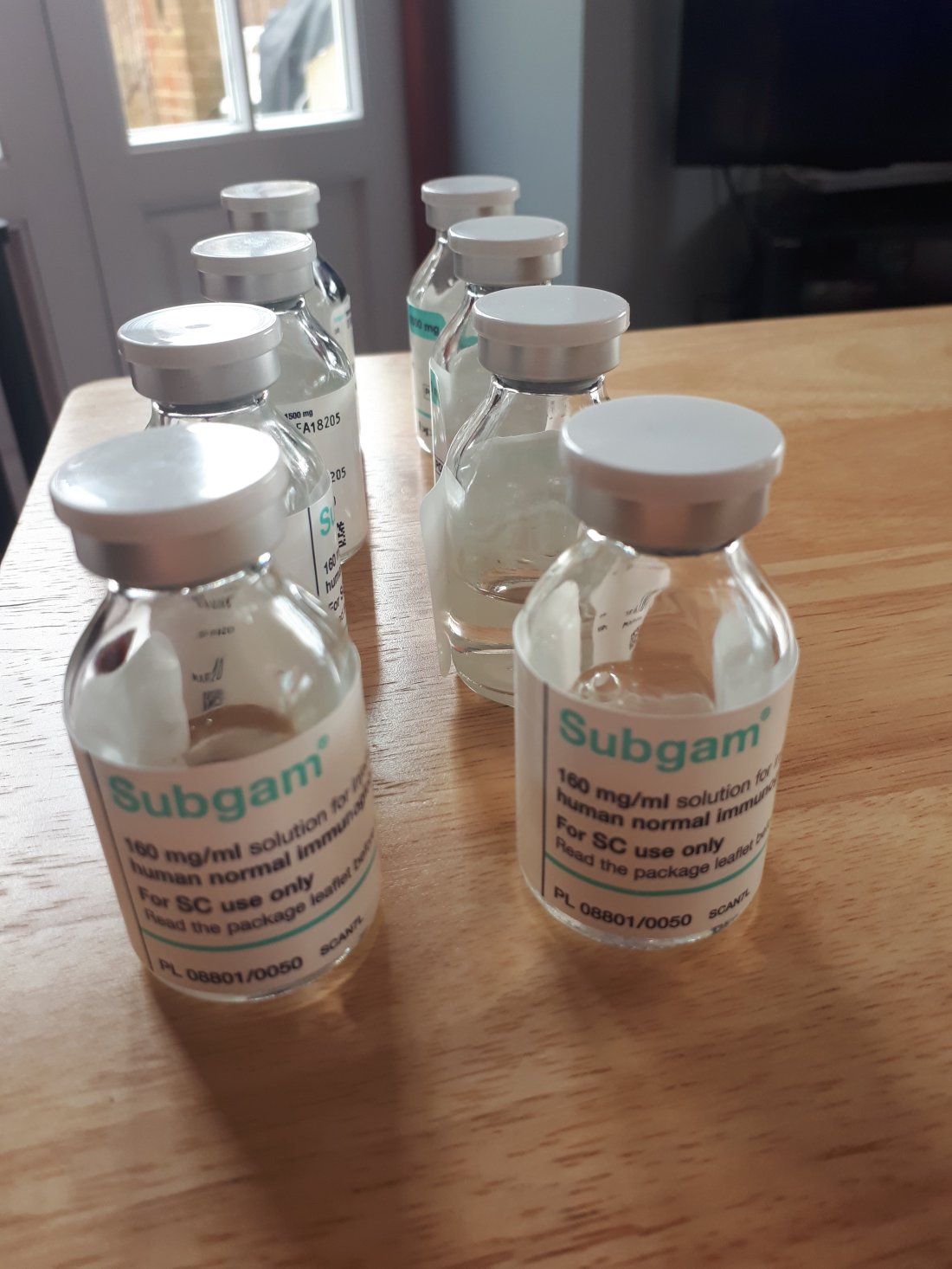
During my 30 years the NHS has been my rock, growing up I called it my second home. For the first few months of my life our local doctor didn’t believe there was anything wrong with me (an issue with rare patients) but my parents knew they were wrong and pushed for a diagnosis. From diagnosis day I had an amazing Immunology team looking after me and trying to keep me well with infusions of what we call “liquid gold

Development of Crohns Disease aged 7/8 led me to having a second NHS team. This time in Gastroenterology. Countless procedures to monitor my Crohns and an array of different medications didn’t work and I had my first surgery when I was 12 as an emergency and was in hospital recovering for a long time. During my hours lying in my bed in a side room I made good friends with all the doctors and nurses with many of the nurses coming and keeping me company when they weren’t needed during the night and I was awake. One in particular was named Cordelia and loved jokes so a present to me of a joke book from one of my friends went down really well with her.

My second operation when I was 14 was the same although I wasn’t in for as long due to me being healthy when admitted for my planned op.

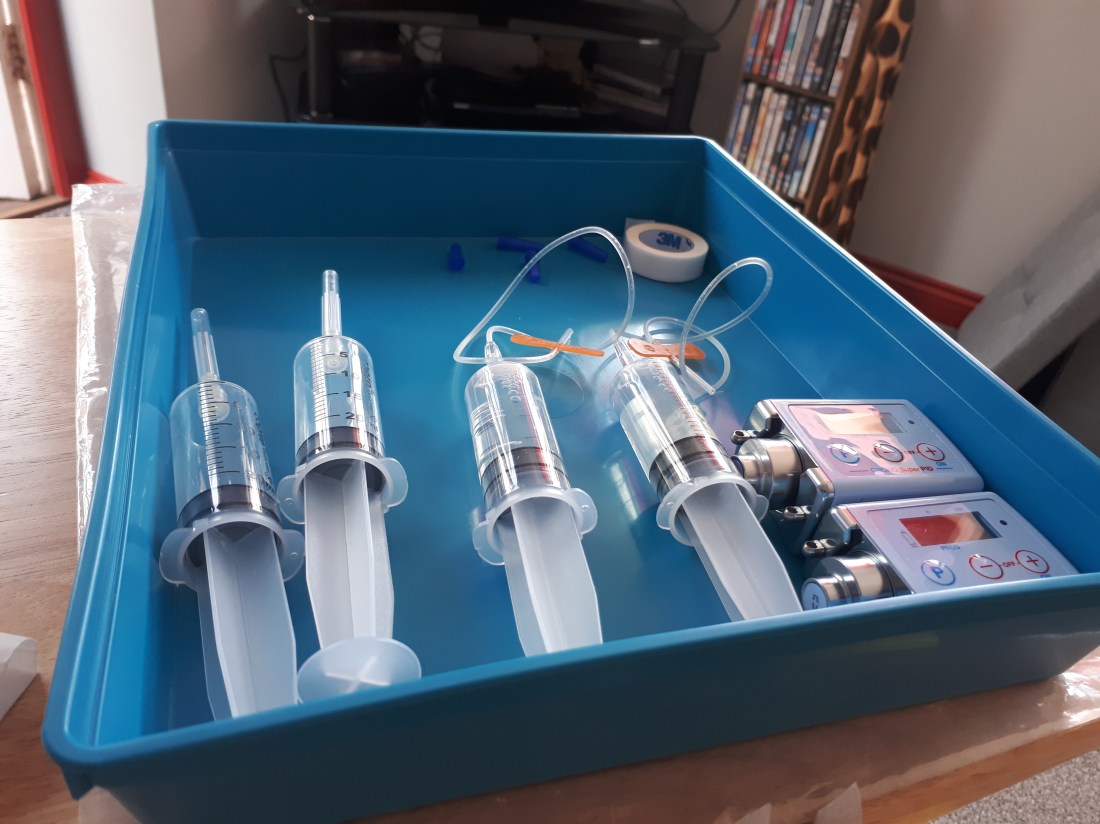
These teams supported me through many years, moving schools and eventually to uni. My Immunology team taught me how to infuse subcutaneously so I could do it myself in university halls and student homes and I carried on.

Age 21 I had a weird side effect to ‘Humira’ and Gastroenterology referred me to Dermatology who quickly diagnosed Psoriasis which had become infected. A mixture of creams and potent tables soon settled down and was manageable.

A few years later I woke up on a Wednesday morning and my knee had swollen and I could barely stand on it . A trip to minor injuries led to a trip to A&E when they stuck a needle in my knee and sucked out excess fluid. There was so much they had to undo the syringe which was full and attach a new one whilst leaving the needle poking out of my knee. After some testing of the fluids, blood tests, x-rays Rheumatology diagnosed me with arthritis. After a year or so I was on some amazing meds and now just get a flare up of it from time to time and a bit of aching but am generally fine.

Then finally about 4 years back I was admitted to hospital because of my Crohns and developed postural hypotension so was in for quite a while. An Endocrinologist was sen to look at me and noticed I had bad nystagmus which explains why I had said my vision was “shimmery” for a few years. A head MRI discovered cerebellar atrophy and white matter on the brain. I was referred to a Neurologist and now see a Neurologist with great knowledge on ataxia.

Meanwhile my Immunology team are doing genetic testing on me to confirm which type of ataxia I have although they’re 99% sure it’s Ataxia Pancytopaenia. They’re working with a Clinical Geneticist to look at my highly interesting DNA.

The NHS also provided me with hydrotherapy to help my joints (hated it) a physiotherapist when I was diagnosed with arthritis, a physiotherapist who came to my house when I developed ataxia properly and now every six weeks I speak to an NHS Clinical Psychologist who helps me overcome the emotional impact of being unable to walk properly.

I am also now under Endocrinology for a new issue.

Through out all this, from the age of 18 I have had amazing GPs and I absolutely adore the one I have now. She liaises with all my specialists, listens to me and accepts that I know what I’m talking about helping me where needed.

So for me the NHS has quite literally been a life saver and continues to be so.

Happy Birthday NHS!NHS_70_logo


World PI Week day 3

My plan was to post every day of World Primary Immunodeficiency Week but fatigue has already made me miss a day.

Today I took over the twitter and facebook feeds of Rare Revolution Magazine to let more people know about Primary Immunodeficiencies.

#PrimaryImmunodeficiency said to affect over six million people worldwide.

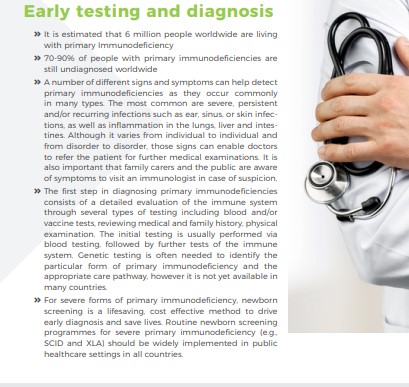
Early Diagnosis

PIDs are a group of over 300 different conditions that affect how the body’s immune system works.

Early Treatment

A large proportion of people affected by a PID have immunoglobulin replacement therapy to help keep them free from infection and are given antibiotics as and when an infection occurs. Some other types of PID may involve taking antibiotic and/or antifungal medicine daily to stave off infection. More specialised treatments and potential cures include bone marrow transplantation, enzyme replacement therapy and gene therapy.

Public awareness of symptoms

The effects of a PID can be immense. For example, a baby born with severe combined immunodeficiency (SCID) might not survive more than a couple of years without isolation in a sterile environment until a bone marrow transplant can be carried out. Even for a child with a less severe disorder, prolonged periods of ill-health can disrupt schooling and social contacts.

For an adult, frequent debilitating illnesses can make it more difficult to pursue a career or enjoy family life. There can be psychological problems, too. Feeling isolated, the fear of losing one’s income, or the anguish of caring for a sick child, can take its toll.


Severe forms of PI

Primary Immunodeficiency UK – PIDUK supports the implementation of a UK national screening programme for Severe Combined Immune Deficiency (SCID) in the knowledge that it will help save the lives of children with SCID.

Extreme susceptibility to infections means that SCID remains fatal within the first year of life without correction of the underlying immune deficiency. Bone marrow transplantation and gene therapy offer curative treatment options for this condition and evidence shows these have a 95% succes rate. This is why PID UK is campaigning for newborn screening to be implemented in the UK for SCID.

You can learn more about primary immunodeficiencies at www.piduk.org