Featured

Covid and Confusion

There’s a lot of unsettlement in the clinically extremely vulnerable at the moment especially amongst the immune compromised and suppressed.

Whilst the news was focusing on the cabinet reshuffle, a majorly important change occurred. The government ended the shielding programme. So many people are saying that as shielding was stopped back in April it doesn’t really affect us but I can assure you it does.

The governments decision to do this makes those of us affected feel unsupported. Many immune deficient patients have made NO antibodies to Covid despite having had the virus or not and 2 vaccinations. Those on immuno supressing drugs have often only made a small amount of antibodies so don’t have as much protection as the majority of the population. For this reason it is SO important for others to get vaccinated and to be sensible. Anti-vaxxers are terrifying and many of us have just cut anyone who refuses to have the vaccine from our lives.

Going to the supermarket and not one other single person wearing a mask is horrible, any indoor setting where it seems members of the public don’t care about others makes the extremely vulnerable worried so we are still taking precautions.

Until 2 weeks ago I hadn’t been to a supermarket for 18 months but I decided I need to pull on my big girl panties and go. I went in on my mobility scooter, wearing a mask and felt like an alien as no one else was. I managed to be there for 5 minutes before I had to leave as I didn’t feel safe and decided to continue with online shopping.

The second thing to cause confusion is the 3rd primary jab, which is not the booster. This jab is for

  • Individuals with primary or acquired immunodeficiency states at the time of vaccination due to certain conditions
  • Individuals on immunosuppressive or immunomodulating therapy at the time of vaccination 
  • Individuals with chronic immune-mediated inflammatory disease who were receiving or had received immunosuppressive therapy prior to vaccination
  • Individuals who had received high-dose steroids (equivalent to >40mg prednisolone per day for more than a week) for any reason in the month before vaccination.

The problem with this is the majority of patients do not know about the 3rd vaccination and were calling it the booster and to make it worse even the GP surgeries don’t seem to know the difference so it is down to hospital consultants to identify and write to GPs to tell them which patients need it. Obviously the big issue is that there is no reason why patients who did not make antibodies to their first two vaccines should make them to the third.

However it’s not all bad news. Ronapreve the monoclonal antibody to treat those with Covid has been approved for use in the most vulnerable.

“The new treatment is expensive and priority will be given to those patients at greatest risk of becoming severely ill.

It will be offered to those over-50 without the necessary antibodies, and those aged 12-49 who are immuno-compromised – for example those with certain cancers – who struggle to mount an antibody response, either through being exposed to Covid, or from vaccination.”

So good news for those of us who haven’t made antibodies but if you haven’t yet been vaccinated what are you waiting for, not only will you be protecting yourself but you’ll be helping protect others too!!

2021 drama

Featured

So 2021 has been interesting so far, apologies for not blogging for so long but infections galore have prevented me doing anything.

Due to my ataxia I regularly aspirate and because of my immunodeficiency it often turns into a chest infection. Due to the regularity I’ve been aspirating I’ve had a chest infection for months, every time it seems to get a bit better I aspirate again and a new infection starts.

On top of all that at the beginning of July I found out I was in the 40% of immuno comprised people not making an antibody response to the Covid vaccines.

This was followed by my chest infection getting so bad I was admitted to hospital with a diagnosis of aspiration pneumonia. So IV antibiotics and finally a chest CT showed a weird infection they’d never seen before.

There was also a small matter of a heatwave at that time and my side room was like a sauna. I’d nicked dad’s Dyson fan and even that was struggling in the heat and the average temperature in my room was 26 and really humid.

The other issue I had been admitted with was an incredibly sore throat hurting to swallow etc but the soreness was too far down my throat for a normal look to see the problem. I’d even rung my GP on the Friday before I was admitted to ask for liquid paracetamol and the guy I spoke with ended up providing me TABLETS which I could NOT SWALLOW. An emergency referral to ENT and a camera down my throat saw me diagnosed with Supraglotitis which can be life threatening so a jab of dexamethosone and different IV antibiotics fixed that.

Months of antibiotics has left me with oral thrush as well so a mouth wash and a 2 week course of Fluconazole sorted that.

Finally I was discharged and went to my parents to recuperate and a week later I stopped antibiotics and within days the infection was back.

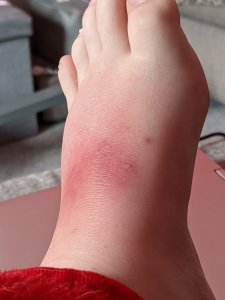
On top of that I managed to develop a foot infection which has not gone despite 3 weeks of antibiotics so I’m now waiting on a referral incase its osteomyelitis. My GP surgery excelled once again last week when I sent another photo of my infected foot and they replied to say they’d ring me in 2 weeks!! So my awesome Immunology team took charge and kicked my GP surgery up the backside resulting in an appointment yesterday and a referral to Orthopedics.

So July and August have not been great but hopefully everything will improve in September.

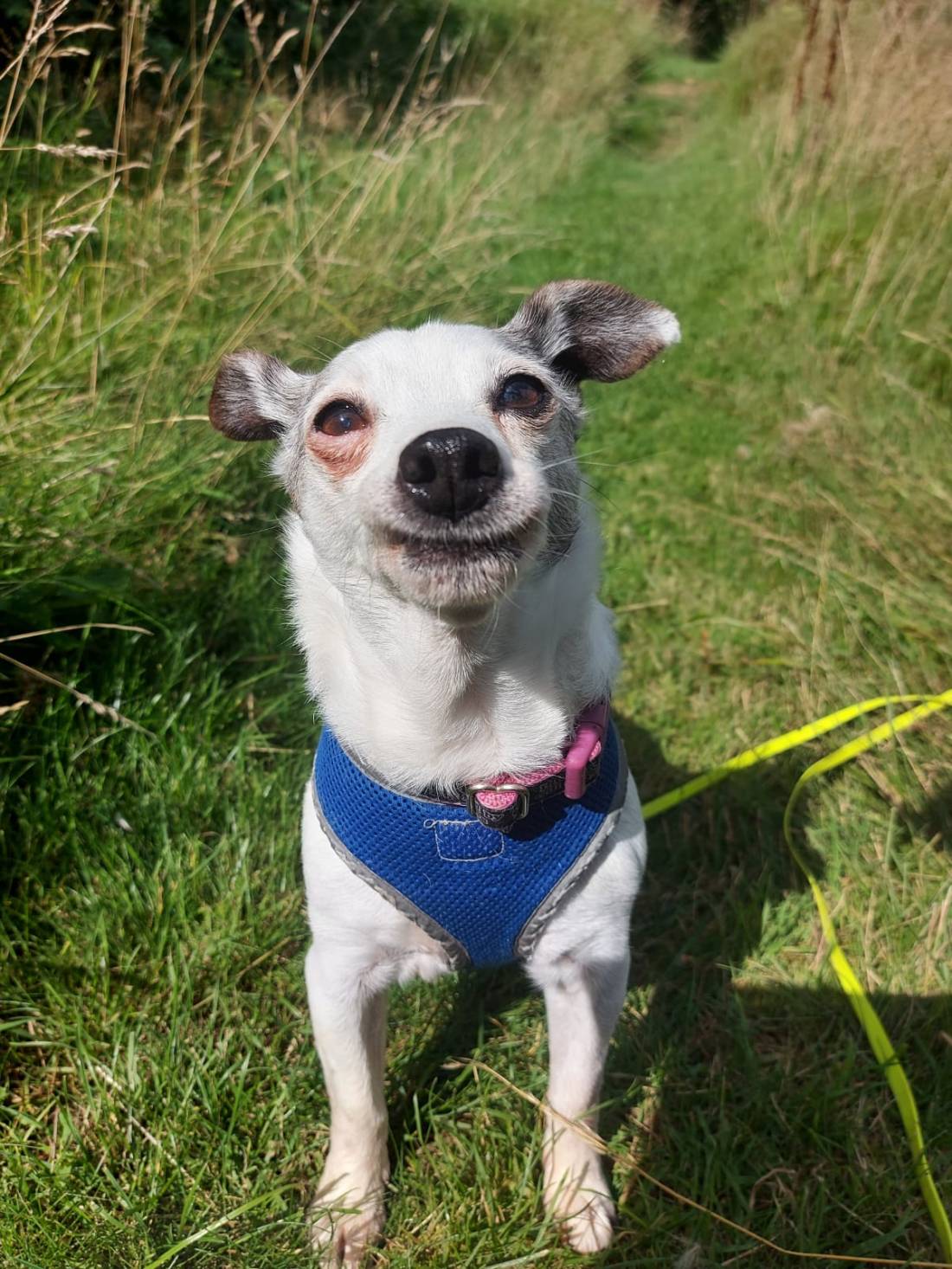
Minnie has of course enjoyed me reecuperating and the instructions for my foot to sit on the sofa with it up.

It’s not over

So many people seem to think the risk of Covid-19 is over, but it’s not.

Social distancing is still enforced, (1 metres plus),masks must be warn on public transport, in hospitals and shops. Personally I think they should be mandatory in offices and should have been made compulsory back in March when lockdown was introduced.

Having been shielding for 4 months I formed a support bubble a few weeks ago with my parents but having been there for 2 nights last week and a contacts husband since testing positive it’s made me think I’m not ready to spend nights away yet.

Last week I had an appointment with Immunology who said whilst they were happy for me to end shielding they did ask me to be very careful and if it’s a choice between a shop and a walk then opt for the walk.

Quite honestly it scares me how relaxed so many people are being. Not social distancing, not believing there’s a risk, basically not being careful.

After the air bridge with Spain was closed and people now have to quarantine for 2 weeks upon returning there has been a lot of complaining. Personally I think anything to prevent the UKs infection rate from rising is a good thing although I do understand why it’s frustrating for people but anything to help stop rates and deaths rising is overall worth it.

So I will still be self isolating as much as possible to reduce the infection risk!!

Last day

Today marks the last day of world primary immunodeficiency week an official week to raise awareness of primary immunodeficiency but in reality those of us affected should never stop raising awareness amongst family, friends, healthcare workers and the public.

I have learnt quite a lot this week in that the anger some patients feel at having this condition outweighs the fact that we can receive treatments for many of the conditions and the benefits this treatment gives us.

I will always be thankful because i know without this treatment and the NHS I would probably not be here today.

Yes to be diagnosed with a rare condition (or 3) sucks but we are so lucky to live in the UK where we receive treatment for it and have access to specialists in the condition we have. Many countries have limited if any access to treatment and do not have Immunologists patients can see and therefore have to travel abroad just for an appointment.

When it comes to treatment and receiving infusions we are lucky to have the option to infuse at home. Until I was 7 or 8 my mum and I had to travel to Oxford every 3 weeks for my infusion meaning i had to take time out of school and mum work. Now I infuse at home once a week when suits me in a time window.

So what I’m trying to say is that yes it can be s**t but we are lucky to live where we live in the time we live.

Day Two

Today marks the end of day two of world pi week so I thought I’d give you some facts and answer some questions.

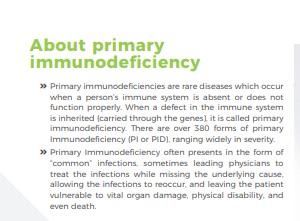
There are nearly 400 primary immundeficiencies (PIDs).

They are genetic disorders and are NOT contagious (you cannot catch a PID from a patient whether you hug, kiss or sleep with them)

My particular PID has changed names over the years as science and medicine has evolved, when I was young it was just Hypogammaglobulanaemia, then it was Common Variable Immunodeficiency and then Primary Immune Dysregulatory Disorder and now since my Ataxia Pancytopaenia gene mutation was discovered the doctors don’t seem to know exactly what to call it.

I was lucky to be diagnosed as a baby to avoid some of the non diagnosed illnesses that late-diagnosed patients are affected by.

WPIW 2

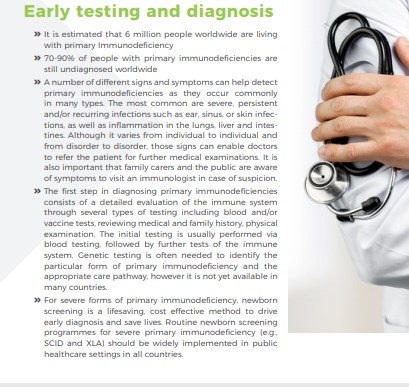
As the image above shows misdiagnosis and un-diagnosis are still massive issues and un-diagnosis can lead to serious health problems affecting a patients entire life.

PID patients are not currently covered by Medical Exemption so we pay for each of our prescriptions, although most PID patients have a pre-payment card to stop our prescription costs spiralling.

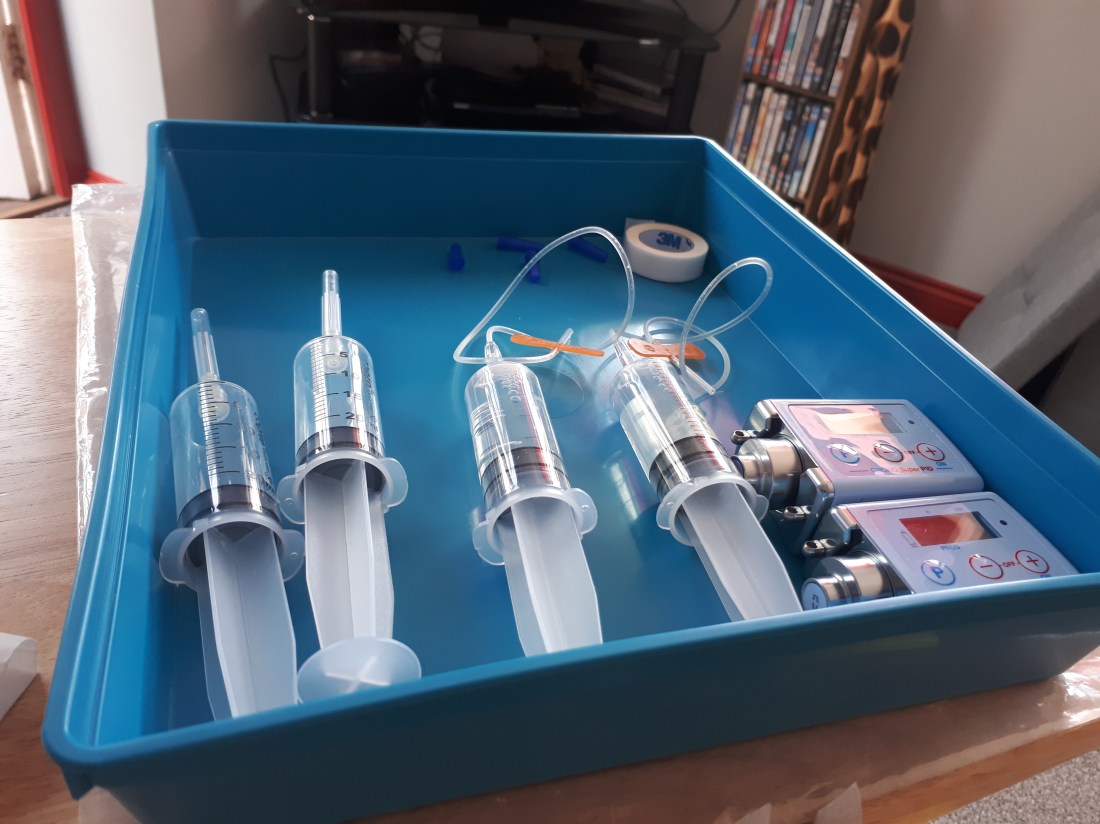
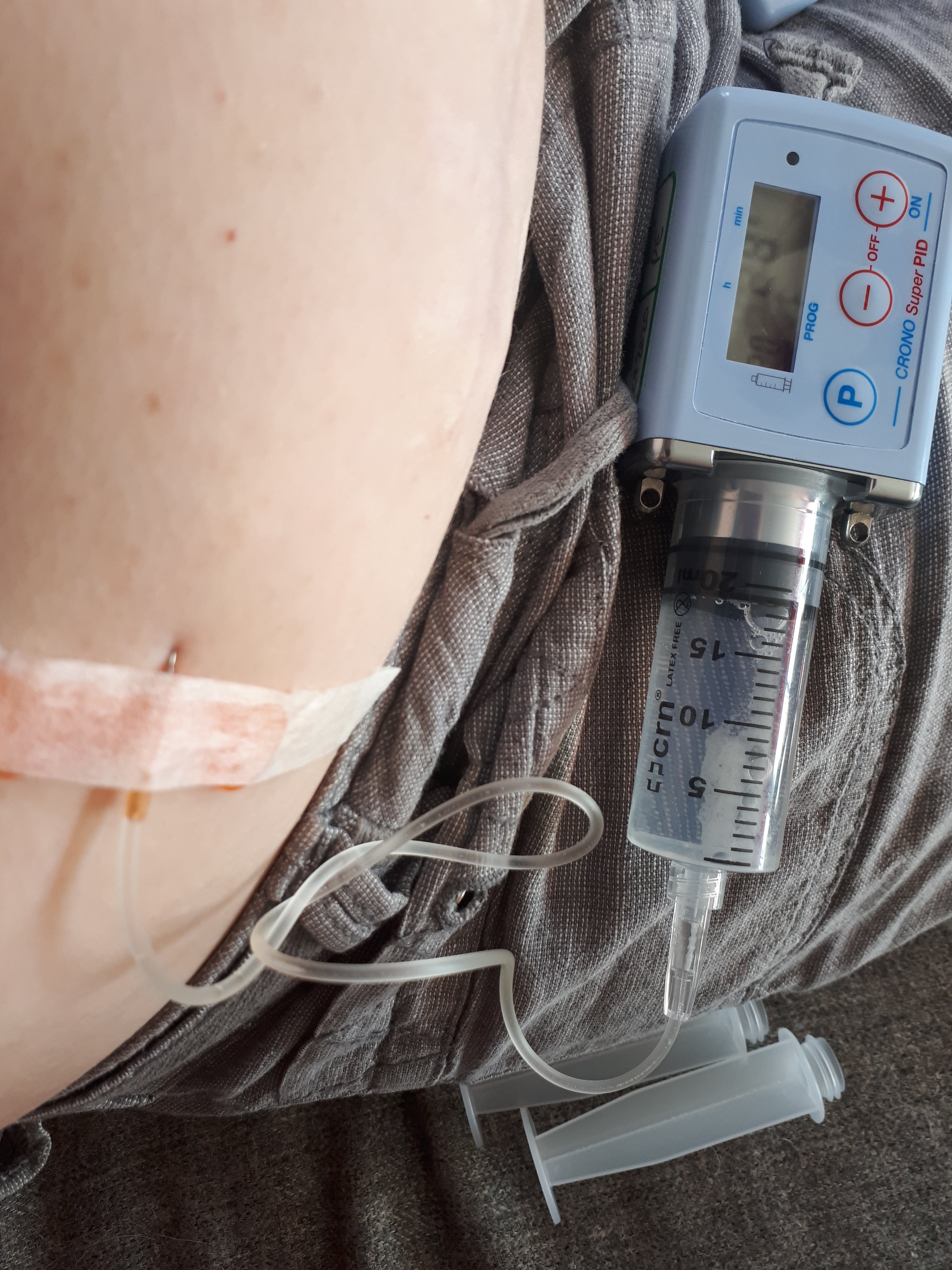
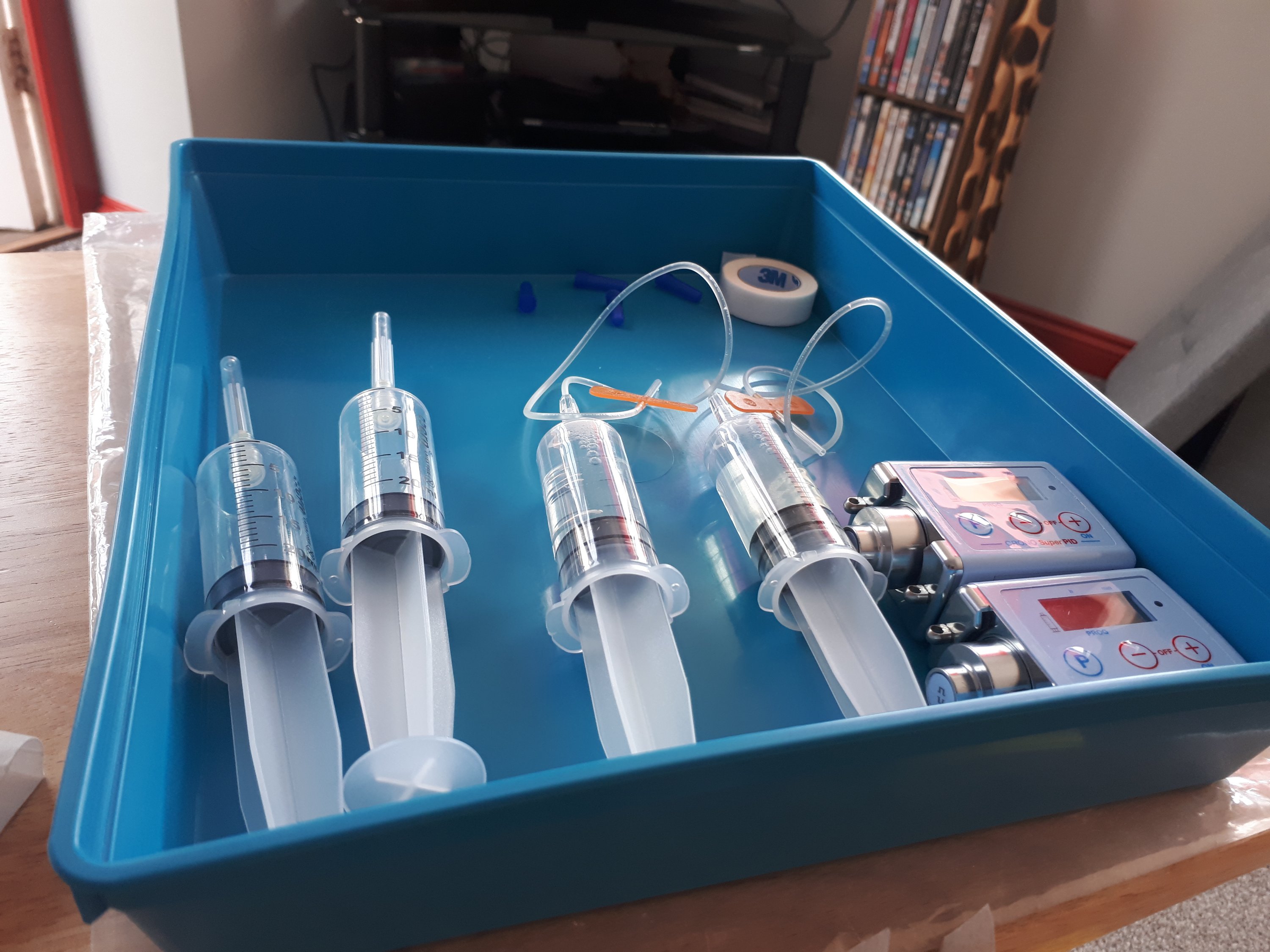
I do my infusions into my stomach (subcutaneously) whilst others do theirs into a vein (intravenously). I did infuse into a vein until I went to University and wanted the freedom to infuse at a time suited to me. During 13 years of infusing subcutaneously I have only had one reaction that caused concern and although it means if I go on a holiday for more than 13 days I have to take my infusion gear with me I do find it a lot easier.

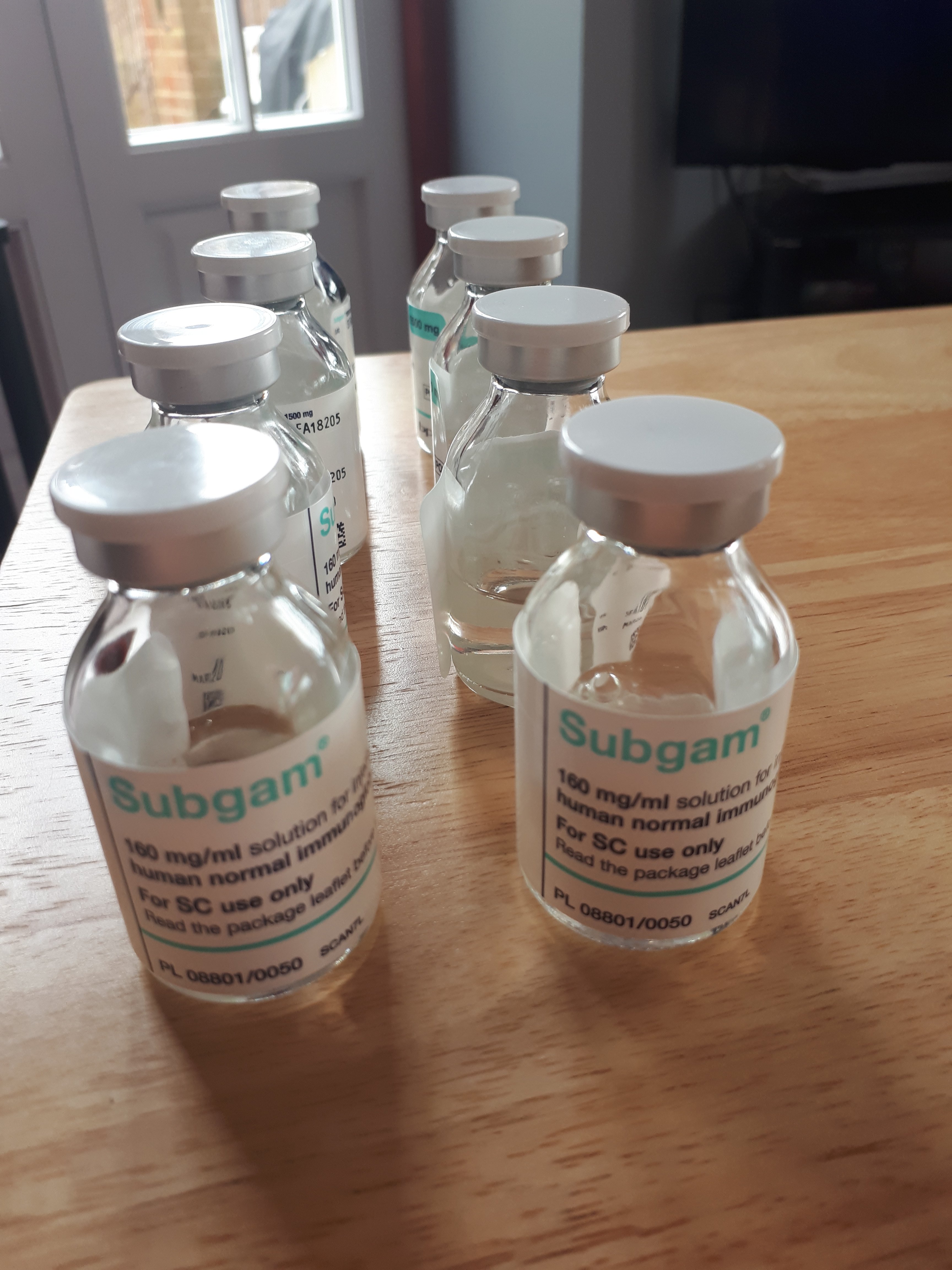
So 8 bottles, 4 syringes, 2 needles keep me healthy(ish) each week and long may it continue!!

Today it Begins

World PI Week 2019 began today. This awareness week may not mean much to so many of you but to those of us with primary immunodeficiencies it is an important week of the year; a chance to raise awareness of a condition we live with everyday.

As it happens today was the day I had to do my infusion. This occurs once a week and is an infusion of other people’s antibodies to keep me healthy. For me and so many others this product is our “liquid gold” keeping us well and healthy.

Each week I infuse 80ml/12grams via two needles over 1 hour.

My product is Subgam and I infuse subcutaneously into my stomach

Some patients choose to infuse every few weeks into a vein more often in a hospital.

I hope that explains my weekly treatment and please do spread the word about primary immunodefiencies both this important week and the rest of time.

Being Rare for Rare Disease Day

Thursday 28th February is Rare Disease Day so in celebration I thought I’d tell you all about my recent diagnosis of a 3rd rare disease.

On Thursday 14th February I was diagnosed with Myelodusplasia Syndrome. A wonderful Valentine’s present.

In all honesty 2019 had been pretty rubbish up to this point with my platelets dropping horribly low and not being to fly to South Africa, being admitted to hospital and having to go for a bone marrow biopsy (not nice to have, I wouldn’t advise it)

The bright side of this diagnosis is that I’m currently low risk so will just be monitored at the moment with regular blood tests.

If you want to learn more about MDS there are two organisations that offer brilliant information; MDS Support Organisation and MDS Foundation.

Rare Disease Day is an important day day for us rare patients to bring a spotlight to rare diseases.

This year Rare Disease UK have created a campaign “illuminating rare diseases” a great chance for patients to share their stories and rare diseases.

EURODIS the voice of rare disease patients is also marking Rare Disease Day encouraging social media participation among patients.

With 3 days to go please support Rare Disease Day and the patients who cope every day with issues you can never fully understand.


Can I Pray For You?

So I’m at the conference in Lisbon and one of the aims is to network so I started chatting to this guy. Just my luck it turns out he had nothing to do with Immunology but was a computer programmer there to make sure all the computers worked properly.

Anyway we were chatting away and I was telling him about my immunodeficieny and he interrupts and says “can I pray for you?” I wish I’d said no but in the shock of it I said “yes”, he followed it up with “can I touch your shoulder whilst I pray?” Major shock still playing a role I said yes again so he put his hand on my shoulder, shut his eyes and started praying out loud for me. Mum was gone getting coffee at this point and couldn’t return soon enough.

I have no problem if people want to pray and turn to religion for help with illness etc and at least he asked me but I so wish I’d said “NO”

After the prayer I told him I wasn’t religious and believed more in science and genetics. He told me I should give God another chance to which I replied “if God can fix my genes and DNA then brilliant”

If prayer gets you through things then brilliant but the next time someone asks me if they can pray for me I will be saying NO.

Happy Birthday NHS

(Apologies in the delay since my last post, fatigue has made me sleep a lot)

Today I’ve seen many posts about how much the NHS has helped people and how some people wouldn’t be here without it and I’m definitely one of them.

During my 30 years the NHS has been my rock, growing up I called it my second home. For the first few months of my life our local doctor didn’t believe there was anything wrong with me (an issue with rare patients) but my parents knew they were wrong and pushed for a diagnosis. From diagnosis day I had an amazing Immunology team looking after me and trying to keep me well with infusions of what we call “liquid gold

Development of Crohns Disease aged 7/8 led me to having a second NHS team. This time in Gastroenterology. Countless procedures to monitor my Crohns and an array of different medications didn’t work and I had my first surgery when I was 12 as an emergency and was in hospital recovering for a long time. During my hours lying in my bed in a side room I made good friends with all the doctors and nurses with many of the nurses coming and keeping me company when they weren’t needed during the night and I was awake. One in particular was named Cordelia and loved jokes so a present to me of a joke book from one of my friends went down really well with her.

My second operation when I was 14 was the same although I wasn’t in for as long due to me being healthy when admitted for my planned op.

These teams supported me through many years, moving schools and eventually to uni. My Immunology team taught me how to infuse subcutaneously so I could do it myself in university halls and student homes and I carried on.

Age 21 I had a weird side effect to ‘Humira’ and Gastroenterology referred me to Dermatology who quickly diagnosed Psoriasis which had become infected. A mixture of creams and potent tables soon settled down and was manageable.

A few years later I woke up on a Wednesday morning and my knee had swollen and I could barely stand on it . A trip to minor injuries led to a trip to A&E when they stuck a needle in my knee and sucked out excess fluid. There was so much they had to undo the syringe which was full and attach a new one whilst leaving the needle poking out of my knee. After some testing of the fluids, blood tests, x-rays Rheumatology diagnosed me with arthritis. After a year or so I was on some amazing meds and now just get a flare up of it from time to time and a bit of aching but am generally fine.

Then finally about 4 years back I was admitted to hospital because of my Crohns and developed postural hypotension so was in for quite a while. An Endocrinologist was sen to look at me and noticed I had bad nystagmus which explains why I had said my vision was “shimmery” for a few years. A head MRI discovered cerebellar atrophy and white matter on the brain. I was referred to a Neurologist and now see a Neurologist with great knowledge on ataxia.

Meanwhile my Immunology team are doing genetic testing on me to confirm which type of ataxia I have although they’re 99% sure it’s Ataxia Pancytopaenia. They’re working with a Clinical Geneticist to look at my highly interesting DNA.

The NHS also provided me with hydrotherapy to help my joints (hated it) a physiotherapist when I was diagnosed with arthritis, a physiotherapist who came to my house when I developed ataxia properly and now every six weeks I speak to an NHS Clinical Psychologist who helps me overcome the emotional impact of being unable to walk properly.

I am also now under Endocrinology for a new issue.

Through out all this, from the age of 18 I have had amazing GPs and I absolutely adore the one I have now. She liaises with all my specialists, listens to me and accepts that I know what I’m talking about helping me where needed.

So for me the NHS has quite literally been a life saver and continues to be so.

Happy Birthday NHS!NHS_70_logo


World PI Week day 3

My plan was to post every day of World Primary Immunodeficiency Week but fatigue has already made me miss a day.

Today I took over the twitter and facebook feeds of Rare Revolution Magazine to let more people know about Primary Immunodeficiencies.

#PrimaryImmunodeficiency said to affect over six million people worldwide.

Early Diagnosis

PIDs are a group of over 300 different conditions that affect how the body’s immune system works.

Early Treatment

A large proportion of people affected by a PID have immunoglobulin replacement therapy to help keep them free from infection and are given antibiotics as and when an infection occurs. Some other types of PID may involve taking antibiotic and/or antifungal medicine daily to stave off infection. More specialised treatments and potential cures include bone marrow transplantation, enzyme replacement therapy and gene therapy.

Public awareness of symptoms

The effects of a PID can be immense. For example, a baby born with severe combined immunodeficiency (SCID) might not survive more than a couple of years without isolation in a sterile environment until a bone marrow transplant can be carried out. Even for a child with a less severe disorder, prolonged periods of ill-health can disrupt schooling and social contacts.

For an adult, frequent debilitating illnesses can make it more difficult to pursue a career or enjoy family life. There can be psychological problems, too. Feeling isolated, the fear of losing one’s income, or the anguish of caring for a sick child, can take its toll.


Severe forms of PI

Primary Immunodeficiency UK – PIDUK supports the implementation of a UK national screening programme for Severe Combined Immune Deficiency (SCID) in the knowledge that it will help save the lives of children with SCID.

Extreme susceptibility to infections means that SCID remains fatal within the first year of life without correction of the underlying immune deficiency. Bone marrow transplantation and gene therapy offer curative treatment options for this condition and evidence shows these have a 95% succes rate. This is why PID UK is campaigning for newborn screening to be implemented in the UK for SCID.

You can learn more about primary immunodeficiencies at www.piduk.org